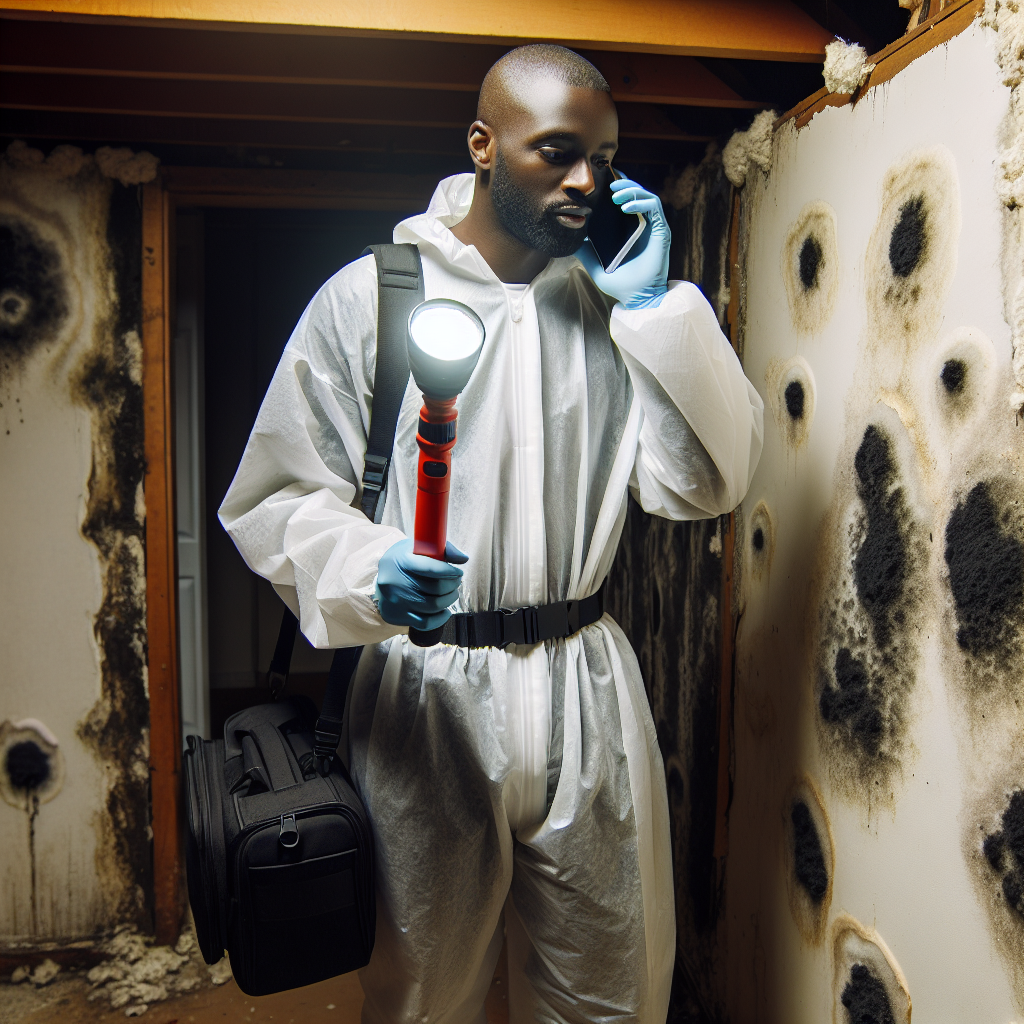
Georgia has no standalone mold disclosure statute. That single fact shapes everything inspectors need to understand about their legal exposure, their reporting obligations, and how to protect both their clients and their careers. Unlike states such as California or Texas that have codified mold testing and disclosure requirements, Georgia operates under a patchwork of general property, consumer protection, and trade practice laws that still impose real consequences for inspectors who get it wrong.
At Air Care Labs in West Midtown, Atlanta, we provide certified air and surface sample analysis for inspectors and remediators across Georgia. This article breaks down the actual statutes that govern your work, the practical gaps that create liability, and how to build a defensible inspection practice around mold.
The Legal Landscape: What Georgia Law Actually Says
No Mold-Specific Disclosure Mandate
Georgia has no statute requiring sellers, landlords, or inspectors to disclose mold specifically. There is no state-mandated mold testing threshold, no required remediation standard, and no licensing board for mold assessors. The Georgia Department of Public Health has acknowledged this gap, noting that rental properties “may be subject to a local housing code” but offering no statewide mold guidance.
This stands in contrast to the flooding disclosure requirement under O.C.G.A. § 44-7-20, which requires landlords to notify prospective tenants in writing if a property has sustained flood damage at least three times in the preceding five years. Mold resulting from flooding falls under this provision, but mold from other moisture sources (leaking pipes, condensation, poor ventilation) does not trigger any specific disclosure duty.
The Georgia Home Inspector Trade Practice Act
The statute that most directly governs your work as an inspector is O.C.G.A. § 8-3-330 through § 8-3-332, Georgia’s Home Inspector Documentation Act enacted in 1994. It defines a home inspector as anyone who, for consideration, inspects and reports on the condition of a home or single-family dwelling for a prospective purchaser or seller. The law requires three things in writing:
- The scope of the inspection, including structural elements and systems to be inspected
- A statement that the inspection is visual in nature
- Written notification of any defects noted, along with recommendations that experts be retained to determine the extent and corrective action necessary
That third requirement is where mold liability lives. If you observe visible biological growth, active water intrusion, persistent moisture staining, or conditions conducive to mold (elevated humidity, inadequate ventilation, standing water in crawl spaces), these are defects. Failing to note them and recommend further evaluation violates the reporting standard that Georgia law imposes on every inspector.
Consumer Protection: The Georgia Fair Business Practices Act
The Georgia Fair Business Practices Act (O.C.G.A. § 10-1-390 et seq.) declares unfair or deceptive acts in consumer transactions unlawful. While this statute was designed broadly for consumer protection rather than home inspection specifically, Georgia courts have applied it to real estate transactions where material conditions were misrepresented or omitted.
Importantly, Georgia courts have held that a party does not need to have “intentionally deceived” a buyer to violate the Act — having “ample reason to know” a misrepresentation was made is sufficient. For an inspector, this means that overlooking obvious moisture issues or downplaying visible growth could create liability even without fraudulent intent.
The Material Defect Standard
Georgia follows a general “buyer beware” (caveat emptor) framework, but sellers are still required to disclose known material defects that could significantly affect a property’s value, safety, or usability. While Georgia does not mandate a standardized seller disclosure form, the duty to disclose material defects is established through case law and general property statutes.
As an inspector, your report becomes a critical document in this chain. If you identify conditions that a reasonable inspector would recognize as mold-related, your report must reflect those findings. Omission doesn’t just expose you to liability — it can expose the buyer, the seller’s agent, and the transaction itself to dispute.
Where Inspectors Get Into Trouble
Overstepping Qualifications
The most common legal pitfall for Georgia inspectors is providing definitive mold identification without proper credentials. Unless you hold certification in microbial assessment (such as CMC through ACAC, or CIE through the IICRC), telling a client “that’s black mold” or “this mold is toxic” goes beyond the scope of a visual inspection and exposes you to claims of practicing outside your competence.
Georgia does not license or regulate mold assessors at the state level. There is no state certification requirement. But the absence of regulation does not mean the absence of liability. If your identification proves wrong and a client relies on it to their detriment, you may face negligence claims under common law.
The safer practice: document what you see objectively (visible biological growth, discoloration consistent with microbial activity, musty odor, moisture intrusion) and recommend that the client engage a qualified professional for sampling and laboratory analysis.
Inconsistent Reporting
Another significant risk is inconsistency. If you recommend mold testing on one property with visible moisture staining but skip the recommendation on a similar property, you’ve created a pattern that a plaintiff’s attorney can use to demonstrate negligence or bias. Courts and arbitrators look for systematic, defensible practices.
Develop a written internal policy that defines your triggers for recommending further mold evaluation. Apply it uniformly. Document it. This isn’t just good practice — it’s your best defense.
Inadequate Documentation
Georgia’s Trade Practice Act requires written documentation. But the bare minimum — noting “possible mold observed” in a report — may not be enough to protect you in a dispute. Strong documentation includes specific location, approximate extent, associated moisture conditions, photographs with metadata, and a clear written recommendation for laboratory testing or professional assessment.
How Air Care Labs Supports Your Practice
At Air Care Labs, we work with inspectors across Georgia to close the gap between what you observe in the field and what can be scientifically confirmed in the lab. Our certified laboratory in West Midtown, Atlanta, provides rapid-turnaround air and surface sample analysis that gives you and your clients defensible, evidence-based results.
What We Provide
Air and surface sampling analysis. We process spore trap cassettes, tape lifts, swab samples, and bulk material samples with results typically available within 24 to 48 hours. Every report identifies genus-level mold types and spore concentrations, with interpretive context to help you and your client understand what the numbers mean.
Post-remediation verification testing. After a remediation contractor completes their work, clearance testing confirms whether spore levels have returned to acceptable ranges. We provide the independent lab documentation that protects both the remediator and the property owner.
Guidance on sampling protocols. Knowing where and how to collect samples is as important as the lab analysis itself. We offer guidance on proper cassette placement, appropriate control samples (outdoor baselines), and chain-of-custody procedures that hold up under scrutiny.
Interpretive support. Mold lab results without context are just numbers. We help inspectors and their clients understand what elevated Aspergillus/Penicillium counts mean relative to outdoor baselines, when Stachybotrys findings warrant immediate action, and how to communicate results in a way that informs without alarming.
Why Independent Lab Testing Matters
Using a certified, independent laboratory creates a clear separation between observation (your job) and identification (the lab’s job). This separation protects your professional scope, gives your clients scientifically credible information, and provides documentation that holds weight in real estate negotiations, insurance claims, and legal proceedings.
Building a Defensible Mold Practice: A Checklist
For Georgia home inspectors who want to handle mold-related findings responsibly and minimize legal exposure, the following practices form a strong foundation:
Document every moisture-related observation. Note the location, extent, and associated conditions (active leak, condensation, staining pattern, odor). Photograph everything. Include this in your written report regardless of whether you believe mold is present.
Use objective language. Describe what you see: “visible biological growth consistent with mold,” “dark discoloration on drywall adjacent to active plumbing leak,” or “musty odor detected in crawl space with standing water.” Avoid making species identifications or health risk assessments.
Recommend professional testing consistently. Whenever you observe conditions conducive to mold growth or visible suspected growth, recommend laboratory testing. Apply this recommendation uniformly across all inspections.
Know the boundaries of your scope. Your inspection is visual. Air sampling, surface sampling, and mold identification require laboratory analysis. Make this distinction clear to clients in your pre-inspection agreement and in your report.
Maintain records. Keep copies of every report, photograph, communication, and client agreement. Georgia’s statute of limitations for negligence claims is four years, and for breach of contract, six years. Your records should outlast those windows.
Partner with an accredited lab. Having a laboratory relationship in place before you need one means faster turnaround when issues arise and consistent methodology across your practice.
Staying Current
Georgia’s regulatory environment around mold may evolve. Several legislative proposals have been introduced over the years to establish mold inspection licensing or disclosure requirements, though none have been enacted as of early 2026. Meanwhile, individual municipalities may adopt local housing codes that impose additional requirements.
Stay connected with professional associations like the Georgia Association of Home Inspectors (GAHI), the American Society of Home Inspectors (ASHI), or the International Association of Certified Home Inspectors (InterNACHI) for updates on regulatory changes. Continuing education on moisture intrusion, indoor air quality, and mold fundamentals strengthens both your competence and your credibility.
The Bottom Line
Georgia’s lack of specific mold legislation does not mean inspectors operate without legal risk — it means the risk is less defined and harder to anticipate. The statutes that do exist (the Home Inspector Documentation Act, the Fair Business Practices Act, and general property disclosure duties) collectively require honest, thorough, and well-documented reporting of conditions that could affect a property’s safety or value.
Mold fits squarely within that framework. By documenting what you observe, staying within your professional scope, recommending laboratory testing when warranted, and partnering with a certified lab like Air Care Labs, you can handle mold-related findings with confidence and keep your practice on solid legal ground.
Air Care Labs is a certified mold testing laboratory located in West Midtown, Atlanta. We provide air and surface sample analysis, post-remediation verification, and consulting support for home inspectors, remediators, and property professionals throughout Georgia. Contact us to learn more about our services or to set up a professional account.